
About the Foundation
In memory of Daniela
Established in 2022, the Daniela Dwyer Foundation honours the life of Daniela Dwyer and fights to ensure other brain cancer patients have access to diagnostic and treatment options that she didn't.
Who We Are
Our Purpose
Daniela had a mighty will and a strong character, with a natural ability to lead, help and mentor others. She would have wanted to do everything in her power to turn her battle into making a positive change for other brain cancer sufferers.
In her memory, we have established The Daniela Dwyer Foundation to raise critical and much needed funding for research into brain cancer diagnosis and treatment. We want to help put an end to brain cancer as a terminal illness. Daniela fought this insidious disease strongly and with remarkable courage. We owe it to her, and every other sufferer of brain cancer, to do everything we can to make a meaningful change to their lives, and in their honour.
Honouring Her Fight
Daniela's Legacy
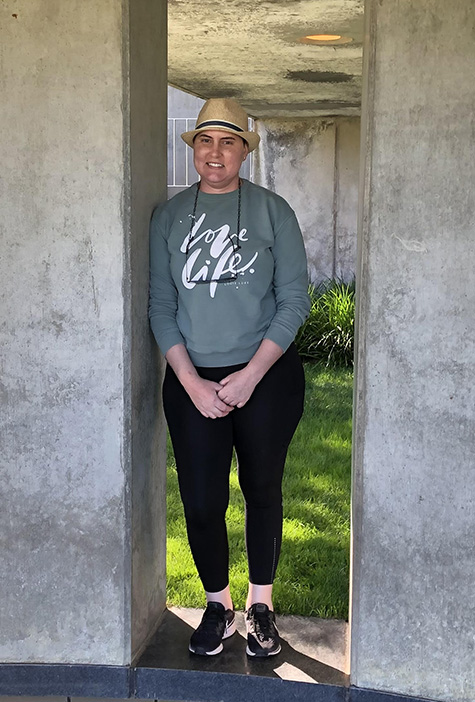
While chemotherapy and radiation therapy did not work for Dee, she was able to access Paxalisib, a cancer-fighting drug approved by the U.S. FDA for compassionate use but not available in Australia. Working closely with Professor Sudha Rao at QIMR Berghofer Medical Research Institute and Dee's Canberra oncologist, we sought permission from the TGA to import the drug from the U.S.
As the first person in Australia to use Paxalisib, the process was long, bureaucratic, and frustrating. We waited while weeks passed and watched as Dee's condition deteriorated rapidly, our hopes fading. By the time the drug arrived, Dee could only take it for two weeks before she became incapable of swallowing.
“Even in those two short weeks, Professor Rao's testing on Dee's blood indicated the tumours were responding positively to Paxalisib.”
The Blood Test That Could Change Everything
Professor Rao and her research team at QIMR Berghofer developed a non-invasive liquid biopsy blood testing technology. Dee's blood samples have been an invaluable source of information and proof for this research. With early intervention, the liquid biopsy can show if, and how, a brain cancer patient's circulating cancer cells respond to chemotherapy or other drugs — meaning treatment can be tailored to maximise each patient's response.
We want Dee's legacy to live on by offering an alternative to current treatment options. We want to change the approach to diagnosis so that early intervention and liquid biopsy testing becomes routine for those beginning their brain cancer journey. Raising funds to support the introduction of Professor Rao's blood testing technology is our first fundraising initiative.
The Ultimate Goal
If we can ensure that every oncologist requests Professor Rao's liquid biopsy test, we will have achieved a remarkable milestone of change in the future treatment of brain cancer — and Dee's contribution and passing will not have been in vain. The ultimate goal is for this blood testing platform to become standard of care, so that every oncologist uses this test to monitor their patient's cancer.
Monitoring in real time will allow immediate and personalised combinations of drugs, giving patients the best possible chance to respond to treatment.
Dee's legacy will live on not only in the knowledge gained by Professor Rao and her research team, but in the difference that knowledge will make to future brain cancer treatment. We are comforted and so proud that Dee has contributed to this valuable research. She would have wanted to do everything possible to make a difference — and we truly believe she has paved the way for remarkable and tangible changes in the way brain cancer is treated.
The Reality
About Brain Cancer
The leading cancer killer of Australians under 40
Brain cancer kills more Australians under the age of 40 than any other cancer. It also kills more children than any other disease.
Almost no progress in 30 years
Survival rates for brain cancer have increased by just 1% in the last three decades — a stark contrast to the progress made in other cancers.
Critically underfunded
Despite its devastating impact, brain cancer receives less than 5% of Federal Government cancer research funding. This is why organisations like ours exist.
Glioblastoma survival rates are devastating
Just 36% of patients diagnosed with glioblastoma survive one year. After three years, the survival rate drops to only 8% — making it one of the most lethal cancer diagnoses.
A new diagnosis every 5 hours
An Australian is diagnosed with brain cancer every 5 hours. That's nearly 5 people every day receiving life-altering news, underscoring the urgent need for better detection and treatment.
Surgical removal is often impossible
Unlike cancers in other parts of the body, surgeons cannot simply remove surrounding tissue to ensure all cancer cells are taken out — the brain is far too delicate. Brain tumours often spread throughout the brain and grow thin, root-like filaments into normal tissue, making complete removal extremely difficult or impossible.
Radiation may only delay tumour growth
Radiation therapy may only temporarily slow tumour progression rather than stop it. It also carries serious long-term side effects including memory loss, stroke-like symptoms, and poor brain function — significantly impacting a patient's quality of life.
More research is critical
Highly malignant brain tumours contain multiple mutations that create different cancer cells within the same tumour. The complexities of brain cancer are still being understood, and with more research we can target the unique vulnerabilities of each cancer cell and develop more accurate, personalised treatments.